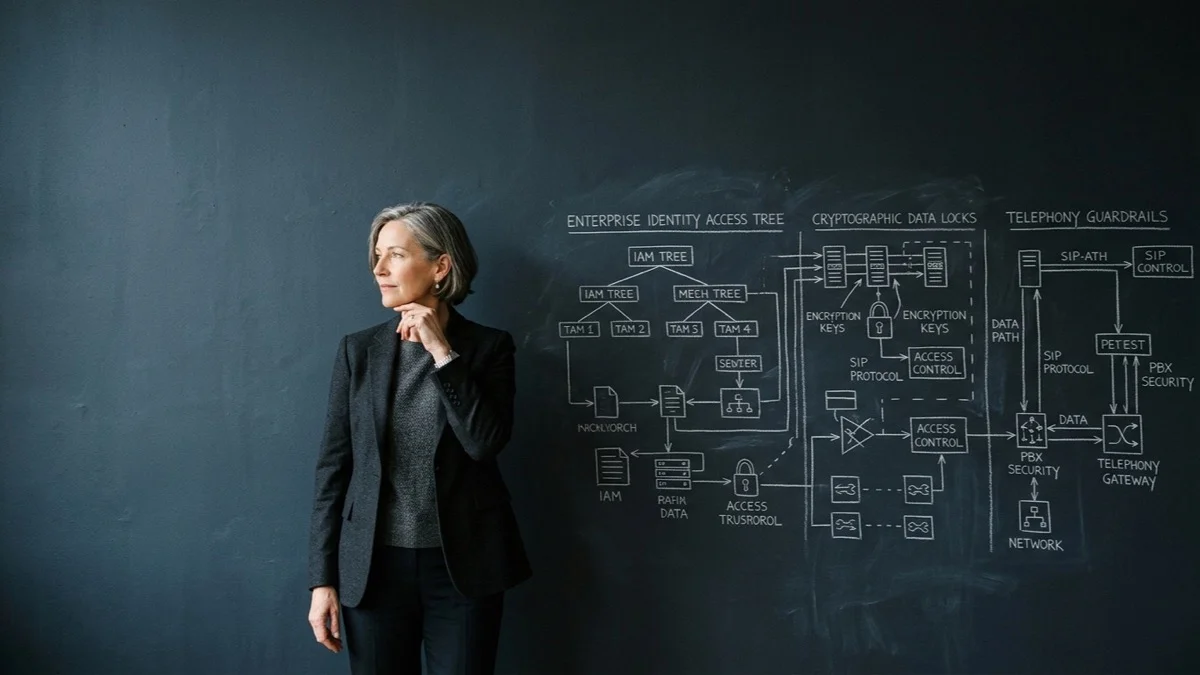
AI case management securityStart With IT, Not Workflows: The Enterprise Blueprint for Legal AI Security
Autonomous AI workflows deployed on weak identity foundations create catastrophic risk. Here is how to secure legal case management from IAM to statutory TCPA guards.
When mid-market litigation firms and legal tech teams rush to deploy autonomous AI agents or contract an external AI agency, the project almost never fails because of the large language model. The prompts work. The document summaries look impressive in a sales demo.
The project fails because the firm attempted to deploy autonomous agentic workflows on top of broken IT and identity foundations.
The bottom line: In legal case management, you must start with IT, not workflows. If you deploy AI agents before establishing strict IAM boundaries, optimistic concurrency control, and statutory communication guards, you do not get operational efficiency - you get silent data loss, ethical wall breaches, and catastrophic compliance liability.
Under ABA Formal Opinion 512, attorneys bear non-delegable ethical duties of competence, confidentiality, and supervisory control over generative AI tools and non-lawyer vendors. Treating AI security as a secondary operational task violates that obligation.
Here is why legal AI implementations break in production, and how we engineered Obelisk legal intake to enforce enterprise-grade security from identity to the database layer.
The five fatal failure modes of legal AI deployments
Every modern legal operations leader evaluating AI agents or agency partnerships faces five recurring operational breakdown patterns:
| Failure Mode | Root Architectural Cause | Real-World Litigation Impact |
|---|---|---|
| 1. Over-Permissioned Agency Access | Lack of scoped IAM roles, with contractors added as generic "admin" or "staff". | Agency developers testing intake workflows gain visibility into privileged records across every matter in the firm. |
| 2. Silent Data Overwrite | Missing Optimistic Concurrency Control (OCC) on shared case tables. | A background AI worker patches a lead record, permanently erasing an attorney's simultaneous interview notes. |
| 3. Outbound TCPA Landmines | Inbound SMS logged without synchronous carrier opt-out suppression. | An automated outreach agent texts a consumer who replied "STOP", triggering $1,500 statutory penalties per hit. |
| 4. Ambient Secrets in Workstations | Static production keys exported to developer machines or shared Slack channels. | A compromised contractor laptop exposes production database and third-party provider credentials. |
| 5. The Identity Whitelist Bottleneck | Hardcoded email filters in code without SAML 2.0 / SCIM federation. | IT cannot enforce centralized multi-factor authentication (MFA) or immediately revoke departures in corporate IdP. |
Inspect Your Security and Tenant Isolation Boundaries
Public LLM APIs expose confidential intake records to third-party data retention policies. OBE keeps evidence parsing deterministic with isolated tenant databases and zero data leakage.
1. Proper IAM first: ethical walls and agency isolation
In high-volume litigation, access control cannot be binary. A firm handling simultaneous consumer arbitrations, mass torts, and sensitive commercial disputes must maintain strict ethical walls between matters.
When an external agency is onboarded to build workflow tools, the standard practice in legacy case management software is disastrous: IT creates a shared account or assigns a generic "Staff" role. In naive implementations, this grants the contractor unconstrained read and write access to every case, client contact, and settlement document in the firm.
At Obelisk, we implement NIST SP 800-207 Zero Trust Architecture principles across a four-tier least-privilege framework:
┌────────────────────────────────────────────────────────────────────────┐
│               OBELISK AI LEAST-PRIVILEGE ARCHITECTURE                  │
├────────────────────────────────────────────────────────────────────────┤
│ TIER 1: IDENTITY & FEDERATION                                          │
│ Corporate SAML 2.0 SSO + SCIM automated deprovisioning. Mandatory MFA.│
├────────────────────────────────────────────────────────────────────────┤
│ TIER 2: REPOSITORY & CODE GATEWAY                                      │
│ No direct pushes to production. Protected branch review + push gates.  │
├────────────────────────────────────────────────────────────────────────┤
│ TIER 3: DATA ISOLATION                                                 │
│ 100% synthetic records in staging. Zero real client PII on dev hosts.  │
├────────────────────────────────────────────────────────────────────────┤
│ TIER 4: RUNTIME & TOOL ISOLATION                                       │
│ Containerized AgentOS sandboxes with read-only case mounts.            │
└────────────────────────────────────────────────────────────────────────┘
- Matter-Level RBAC / ABAC: An organizational staff member cannot view a case simply by virtue of being an employee. Access is explicitly derived from matter assignments (
caseTeamMembers), enforcing ethical walls by default. - Dedicated Agency Personas: External contractors receive an isolated
ai_contractorrole restricted to non-confidential templates and draft creation, with zero access to billing, client portals, or bulk data export. - Hermetic Staging Sandboxes: Developers test workflows exclusively against synthetic records, mock Twilio numbers, and test payment gateways. Production database credentials never leave the production perimeter.
2. Eliminating silent data overwrites with optimistic concurrency
The most insidious failure mode in legal AI is not model hallucination - it is silent data clobbering.
Consider this sequence:
- An intake specialist opens a complex intake record and conducts a 25-minute factual interview, recording extensive, privileged notes.
- Simultaneously, a background document extraction worker completes processing a 60-page PDF loan agreement and updates the lead record with parsed metadata.
- The background worker issues an unversioned database patch.
- Two minutes later, the human specialist clicks "Save."
In standard case management systems using last-write-wins semantics, one of those updates silently clobbers the other. If the background agent commits last, thirty minutes of human legal analysis evaporates without a trace. If the human commits last, the validated document extractions are undone.
Obelisk resolves this with Optimistic Concurrency Control (OCC):
// Enforcing atomic version validation on all case mutations
export function assertOptimisticLock(
  currentRecord: VersionedRecord,
  expectedLockVersion?: number,
  recordName = 'Case',
): void {
  if (expectedLockVersion === undefined) return

  const currentVersion = currentRecord.lockVersion ?? 0
  if (currentVersion !== expectedLockVersion) {
    throw new ConvexError({
      code: 'CONCURRENCY_CONFLICT',
      message: `${recordName} was modified by another user or agent. Refresh to view latest data.`,
    })
  }
}
Every record carries a strictly incrementing lockVersion. When a user or agent submits a change, the mutation asserts that currentRecord.lockVersion === expectedLockVersion. If a background worker committed an update while the attorney had the form open, the system blocks the overwrite and prompts for a visual merge.
In addition, Obelisk partitions the entity schema: AI workers are restricted to writing into dedicated aiEnrichments and aiSuggestions sub-documents. They are physically barred by schema validators from altering core client details, billing rates, or attorney work product.
Verify Ethical Compliance Under ABA Formal Opinion 512
Law firms need mathematically verified extraction boundaries before confidential documents enter legal review. Inspect our audit logs and deterministic parsing pipeline.
3. The TCPA statutory landmine in automated communications
Law firms running consumer intake funnels rely heavily on automated SMS appointment reminders and engagement workflows. But deploying conversational AI agents to handle lead follow-up without rigorous statutory guardrails creates catastrophic liability.
Under the Telephone Consumer Protection Act (47 U.S.C. § 227, the TCPA), sending automated text messages without prior express written consent carries statutory damages of $500 per violation, trebled to $1,500 for willful or knowing violations.
CONSUMER SENDS "STOP"
         │
         ▼
┌─────────────────────────────────┐
│ Twilio Webhook (Inbound SMS)    │
└────────────────┬────────────────┘
                 │
                 ▼
┌────────────────────────────────────────────────────────┐
│ Synchronous TCPA Keyword Interceptor                   │
│ [STOP, STOPALL, UNSUBSCRIBE, CANCEL, END, QUIT]        │
└────────────────┬───────────────────────────────────────┘
                 │
         ┌───────┴───────────────────────────────┐
         ▼                                       ▼
┌───────────────────────────────┐ ┌───────────────────────────────┐
│ Insert phoneOptOutSuppression │ │ Mark lead doNotContact = true │
│ Immutable Carrier Audit Row   │ │ Revoke SMS Consent Timestamp  │
└───────────────────────────────┘ └───────────────────────────────┘
                 │
                 ▼
┌────────────────────────────────────────────────────────┐
│ Outbound Guard: assertCanSendSms()                     │
│ All automated agents fail closed on suppressed numbers │
└────────────────────────────────────────────────────────┘
The fatal flaw in most legal CRM setups is treating carrier opt-out messages as passive inbox events. A consumer texts "STOP" or "UNSUBSCRIBE." The message lands in a communication timeline. But because the webhook does not synchronously alter the lead's global contact eligibility, an automated drip campaign or autonomous AI follow-up bot fires another message four hours later.
In the eyes of federal courts, that second message is a willful violation. A rogue automated batch reaching 1,000 opted-out consumers exposes the firm to $1.5 million in indefensible class-action statutory damages.
Obelisk solves this at the webhook gateway:
- Synchronous Keyword Interception: On every inbound message,
twilioWebhooks.tschecks for carrier opt-out keywords (STOP,UNSUBSCRIBE,CANCEL,QUIT,END). - Immediate Global Suppression: The webhook atomically writes to a dedicated
phoneOptOutSuppressionindex and setsdoNotContact = truedirectly on the lead record. - Fail-Closed Outbound Guards: All automated outreach agents, background dispatch crons, and API actions must pass through
assertCanSendSms(). If a number exists in the suppression table, the dispatch fails closed immediately.
4. Zero secrets in code and isolated agent sandboxes
Mid-market firms frequently suffer credential leaks during development sprints. Developers inadvertently commit API tokens into Git, export multiline JSON service keys into shell history, or paste production database strings into local .env files.
Obelisk operates on a strict single-path secrets architecture:
- Infisical RBAC Isolation: Production secrets reside in a dedicated Infisical vault. Production host nodes possess strictly read-only machine identities (
Viewer), permanently preventing a compromised server from modifying or deleting credentials. - In-Memory Injection: Secrets are injected directly into child process memory via
pnpm env:run. Credentials never touch/tmpor unencrypted disk files. - AgentOS Host-Staged Sandboxing: When Flue multi-agent workflows execute complex code analysis or document synthesis, they run inside isolated containers where
/workspace/caseis mounted strictly read-only. Guest agents receive zero database connection strings or cloud storage credentials.
5. Advisory altitude: why Obelisk never gives legal advice
One of the greatest regulatory risks for legal technology providers is the Unauthorized Practice of Law (UPL). Legal software that produces definitive legal conclusions or makes autonomous "file or decline" decisions exposes both the vendor and the law firm to severe disciplinary scrutiny.
In Obelisk, every AI-driven analysis operates under strict Advisory Altitude invariants:
RAW DOCUMENTS / INTAKE LEADS
            │
            ▼
┌────────────────────────────────────────────────────────┐
│ Deterministic Legal Engine + Forced Citations (Reducto)│
└───────────────────────────┬────────────────────────────┘
                            │
                            ▼
┌────────────────────────────────────────────────────────┐
│ Advisory MCP Surface Gate: assertAdvisoryMcpSurface()   │
│ Strips forbidden vocabulary:                           │
│   • "You should file"                                  │
│   • "This case has merit"                              │
│   • "Recommended course of action"                     │
└───────────────────────────┬────────────────────────────┘
                            │
                            ▼
┌────────────────────────────────────────────────────────┐
│ Permitted Output: Signals, Fact Frames, Citations Only │
│ Lawyers decide what matters.                           │
└────────────────────────────────────────────────────────┘
The system extracts structured fact frames, calculates statutory countdowns, and validates bounding-box evidence geometry. But the buyer-facing advisory package enforces an allowlist projection (AUDIENCE_ALLOWED_SOURCES) and strips all internal vocabulary through assertAdvisoryMcpSurface.
The software presents verifiable data, confidence scores, and primary statutory citations. The licensed attorney evaluates the record, applies professional judgment, and makes the legal decision.
Engineering case management for the next decade of legal AI
Deploying AI in high-stakes litigation is not an exercise in prompt engineering. It is an exercise in enterprise systems engineering.
If you are evaluating case management software or planning an autonomous AI implementation for your firm, insist on seeing the technical foundations:
- Can the vendor prove that AI background workers cannot overwrite attorney notes?
- Does their telephony integration synchronously block outreach to consumers who text "STOP"?
- Are ethical walls enforced at the database query layer, or does every staff member have access to all cases?
- Are external AI agencies restricted to synthetic test environments with zero access to live client PII?
At Obelisk, we built our case management platform on the principle that governed data and rock-solid IT must precede autonomous workflows. When your data layer is secure, concurrency-controlled, and compliant by default, AI stops being an operational risk and becomes the most powerful advantage your litigation practice has ever possessed.
If you are ready to see how Obelisk combines enterprise security with autonomous intake intelligence,  book an architectural walkthrough with our engineering team.
Find the Right Intake Software and Developers for Your Firm
Ready to protect client records while automating case intake?
👉 Schedule a Consultation with Tim Ottowitz to Review Your Case Type
We will inspect your current data retention policies, review tenant isolation boundaries, and show you how OBE eliminates third-party security vulnerabilities without seat taxes.
Let us build your intake
Want us to build this exact intake pipeline for your firm?
Send us your intake questionnaire, retainer agreement, and document checklist. We will build, test, and deploy a custom, review-ready intake flow for your practice area.
Build My Intake Pipeline